Sleep Basics · Mattress Guide
Understanding Natural Latex Mattress Layers and Firmness
A natural latex mattress is not defined by one material or one firmness label. Its feel emerges from the layers working together: their thickness, density, position, and the way they respond to your body. Knowing how those details interact can make comparisons clearer—and help you focus on the comfort that matters to you.
The layers beneath the surface
A mattress can look like a single, simple object. Inside, however, it may be a carefully arranged system. In a natural latex mattress, one or more latex layers form the main comfort and support structure. A quilted cover, a layer of wool or other material, and the foundation beneath the mattress can also affect what you feel.
Latex is resilient: when pressure is removed, it tends to recover its shape rather than staying compressed. That response can feel buoyant or gently springy, although the sensation differs from one mattress to another. A thinner upper layer may create a more direct, firmer feel. A thicker or softer layer can allow more initial cushioning before the body meets firmer material below.
That is why two mattresses both described as “natural latex” may feel noticeably different. The phrase tells you something about the material, but not enough about the design. To understand the likely experience, look beyond the label and ask how many layers there are, how thick they are, and what firmness each one has.
Layers do not work in isolation. A soft top over a firm lower layer may feel welcoming at first while still offering a more substantial response deeper down. A firmer top over a softer base may create a different balance: less initial give, with a more yielding sensation as pressure increases. Those are general patterns, not guarantees. Body shape, weight, sleeping position, and the mattress cover can change how the same construction feels to different people.
Thickness, firmness, and the whole mattress
Thickness describes the depth of a layer or of the mattress as a whole. Firmness describes how resistant the surface feels when you lie on it. They are related, but they are not interchangeable. A thick mattress is not automatically soft, and a thin comfort layer is not automatically firm.
Consider a simple two-layer arrangement. The upper layer shapes the initial impression and helps cushion pressure points. The lower layer contributes to the deeper support and influences how far the sleeper settles. If the upper layer is especially soft or thick, some people may notice a more enveloping feel. If it is thinner or firmer, the surface may feel more immediate and less cushioned. The base layer can then change whether that first impression remains consistent or becomes more supportive under greater pressure.
In a mattress with several layers, the transition between them matters. A sequence of gradually changing firmness can create a more blended sensation. A sharper change between a soft surface and a firm core may feel more distinct. Neither arrangement is universally superior: the right choice depends on whether you prefer a smooth, gradual response or a clearer sense of support beneath the comfort layer.
Mattress makers may describe firmness using words such as plush, medium, or firm. These terms can be useful within one product range, but there is no universal consumer scale that makes every brand’s “medium” identical. A firmness description is best treated as a guide, not a measurement that predicts exactly how a mattress will feel in your room.
Some manufacturers also publish a firmness value or a technical measure such as indentation load deflection, often shortened to ILD. Such figures can help compare materials under specified testing conditions, but they do not translate perfectly into a person’s experience of a finished mattress. Layer thickness, the test method, and the surrounding construction all matter. When comparing specifications, check that figures refer to comparable materials and testing rather than assuming the numbers tell the whole story.
Latex types and construction details
Natural latex is made from latex harvested from rubber trees, but mattresses can differ in how the material is processed and formed. Two commonly discussed methods are Dunlop and Talalay. They are manufacturing processes, not simple rankings of quality or comfort. Products made with either method can vary, and the finished feel depends on the particular formulation and construction.
Shoppers may encounter broad claims that one method is always firmer or always softer. Those statements can oversimplify a complex comparison. Density, firmness specification, layer dimensions, and the rest of the mattress can influence the result. If the production method matters to you, ask the manufacturer how it relates to the specific layer you are considering rather than relying on a general rule.
“Natural latex” also deserves a closer look. Product descriptions may use terms such as natural, organic, or blended in different ways. Read the full material disclosure and look for information about the latex, cover, adhesives, and any other components. A certification may verify particular criteria within its stated scope; it does not by itself determine comfort, durability, or whether a mattress is right for a particular sleeper. Check what the certification covers and which component it applies to.
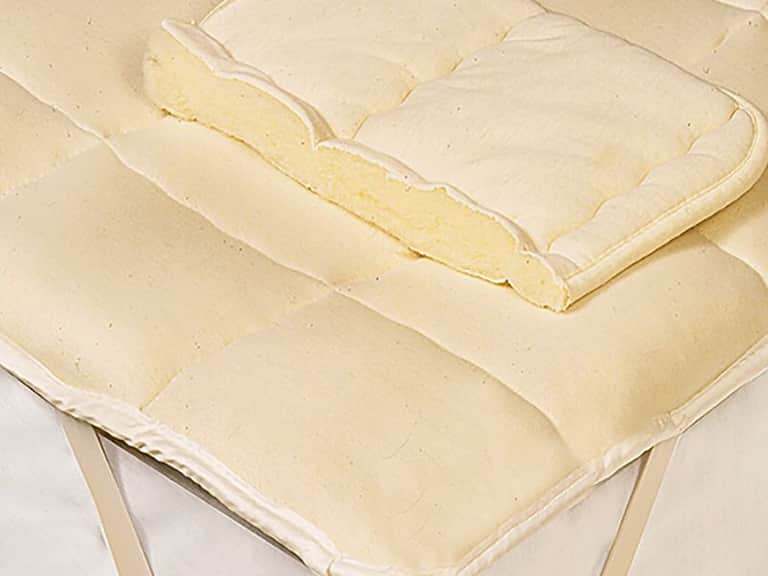
The cover is part of the experience, too. A tightly quilted or padded cover can slightly soften the initial contact, while a thinner cover may let the latex response come through more directly. Added wool or other fibers may change the surface feel and warmth. These details are easy to overlook when comparing core specifications, but they are the first layer your body encounters.
Start with your usual sleep position
Sleep position offers a practical starting point, not a rigid prescription. The goal is to find a surface that feels comfortable while providing support that suits your body. People change positions during the night, so a mattress should be considered in the context of how you actually sleep—not only how you fall asleep.
Side sleeping
Side sleepers often pay close attention to cushioning around the shoulders and hips, where body weight can concentrate against the mattress. A surface that feels too unyielding may create uncomfortable pressure for some people. A more forgiving upper layer may help those areas settle, while the layers beneath should prevent the body from feeling unsupported. Body proportions make a difference: the same mattress can feel different to two people who sleep on their sides.
Back sleeping
Back sleepers may look for a balance between surface comfort and a stable, even feel. Some prefer a closer, firmer sensation; others enjoy more cushioning. Rather than assuming that back sleeping demands a particular firmness, notice whether the mattress feels comfortable across the shoulders, lower back, and hips when you are lying in your normal position.
Stomach sleeping
Stomach sleepers sometimes prefer a firmer, less yielding surface, especially if a soft top allows the middle of the body to settle farther than feels comfortable. That preference is not universal. Layer arrangement and individual build both affect how much sink a person experiences, so personal testing is more useful than a label alone.
Combination sleeping
People who shift between positions may value a responsive surface that is comfortable in more than one posture. Latex’s spring-back quality can make it feel easier to move on than a material that responds more slowly, though the actual effect depends on the mattress. If you rotate frequently, test the mattress by changing positions rather than judging it only while lying still.
Translate preferences into questions
Before comparing natural latex mattresses, describe what you want in ordinary language. Do you prefer to feel held up or gently cradled? Do you want a firm, level surface, or more give at the shoulders and hips? Does your current mattress feel too hard, too soft, or simply uneven? Specific observations are more useful than trying to identify an ideal firmness from a chart.
Then look at the construction. A concise comparison can include these details:
- Layer count: Is the mattress built from one main latex layer or several?
- Layer thickness: How deep is each layer, and how much of the mattress does it account for?
- Firmness by layer: Are the upper layers softer than the core, or is the design more uniform?
- Material disclosure: What is included in the latex, cover, quilting, and any other components?
- Testing and trial terms: Can you try the mattress at home, and what are the return or exchange conditions?
- Foundation requirements: What base or bed frame does the manufacturer recommend?
These questions help turn a vague comparison into a useful one. For example, instead of asking whether a mattress is “soft,” ask whether its top layer is designed to give more readily and how the deeper layers are intended to respond. A knowledgeable retailer or manufacturer should be able to explain the structure without relying only on broad marketing terms.
How to assess comfort in practice
If you can try a mattress in person, give it more than a quick sit or a few seconds lying on your back. Spend several minutes in your usual sleep position, then change positions if you normally do. Notice where you feel pressure, whether movement feels easy, and whether the surface feels supportive across your body. Comfort is a whole-body impression; one pressure point or a showroom label should not determine the decision on its own.
When testing at home, allow time to become familiar with the mattress. The way a new bed feels on the first night may not reflect your settled preference, and bedding can influence the result. Use the same pillow and similar sheets during comparisons where possible. Check the stated trial period and return conditions before purchasing, including any fees, eligibility rules, or required adjustment period.
For couples, both sleepers should assess the mattress. Differences in body weight, preferred positions, and sensitivity to firmness can lead to different impressions of the same construction. If comfort needs diverge, ask about the available layer configurations or split arrangements, where offered, rather than assuming that one firmness label will satisfy both people equally.
A mattress protector, mattress pad, and bedding can also alter the surface sensation. A thick or padded layer may soften the initial feel; a fitted sheet that is too tight can affect how the top responds. If a mattress seems different after adding bedding, consider whether the added layers are changing the experience before concluding that the mattress itself is the only factor.
Avoiding common comparison traps
One familiar mistake is treating a firmness word as a universal promise. Another is assuming that more layers always mean better comfort. Additional layers create more opportunities to adjust a mattress’s feel, but quality and suitability depend on the materials and how the layers work together. Complexity is not an outcome by itself.
It is also easy to focus on a single headline number while overlooking what it measures. Total mattress height, for instance, does not tell you how soft the surface feels. A firmness score without an explanation of the scale may be difficult to compare across manufacturers. Ask what the specification means and whether it describes a raw material, an individual layer, or the complete mattress.
Finally, avoid choosing by sleep position alone. Position is a valuable clue, but it cannot account for every difference in body shape, preference, sensitivity, or sleeping habits. Use it to narrow the questions—not to outsource the decision.
A practical decision checklist
Before settling on a natural latex mattress, pause over a short set of questions. Can you explain how the layers are arranged? Do you know which layer is intended to provide the first comfort and which contributes to deeper support? Have you compared the construction rather than relying on the mattress name? Does the feel suit your preferred positions, and have you checked the trial, care, and foundation requirements?
If key details are missing, ask for them. Clear information should include the material and thickness of each layer, the basis for any firmness description, and the terms that apply if the mattress does not suit you. The answers need not be technical to be useful. They should make it possible to understand what is inside the mattress and how its design is expected to feel.
The central idea: compare the design, not just the label
Natural latex mattresses can offer a resilient, responsive sleep surface, but there is no single latex feel. Thickness determines how much material lies between the sleeper and the deeper support. Firmness influences resistance to pressure. Layer order, cover construction, and personal comfort preferences combine to create the final experience.
That makes the best comparison a practical one. Start with how you sleep and what feels uncomfortable now. Examine each layer, consider where you want more or less cushioning, and test the mattress when possible. A label can start the conversation; the construction and your own experience should finish it.